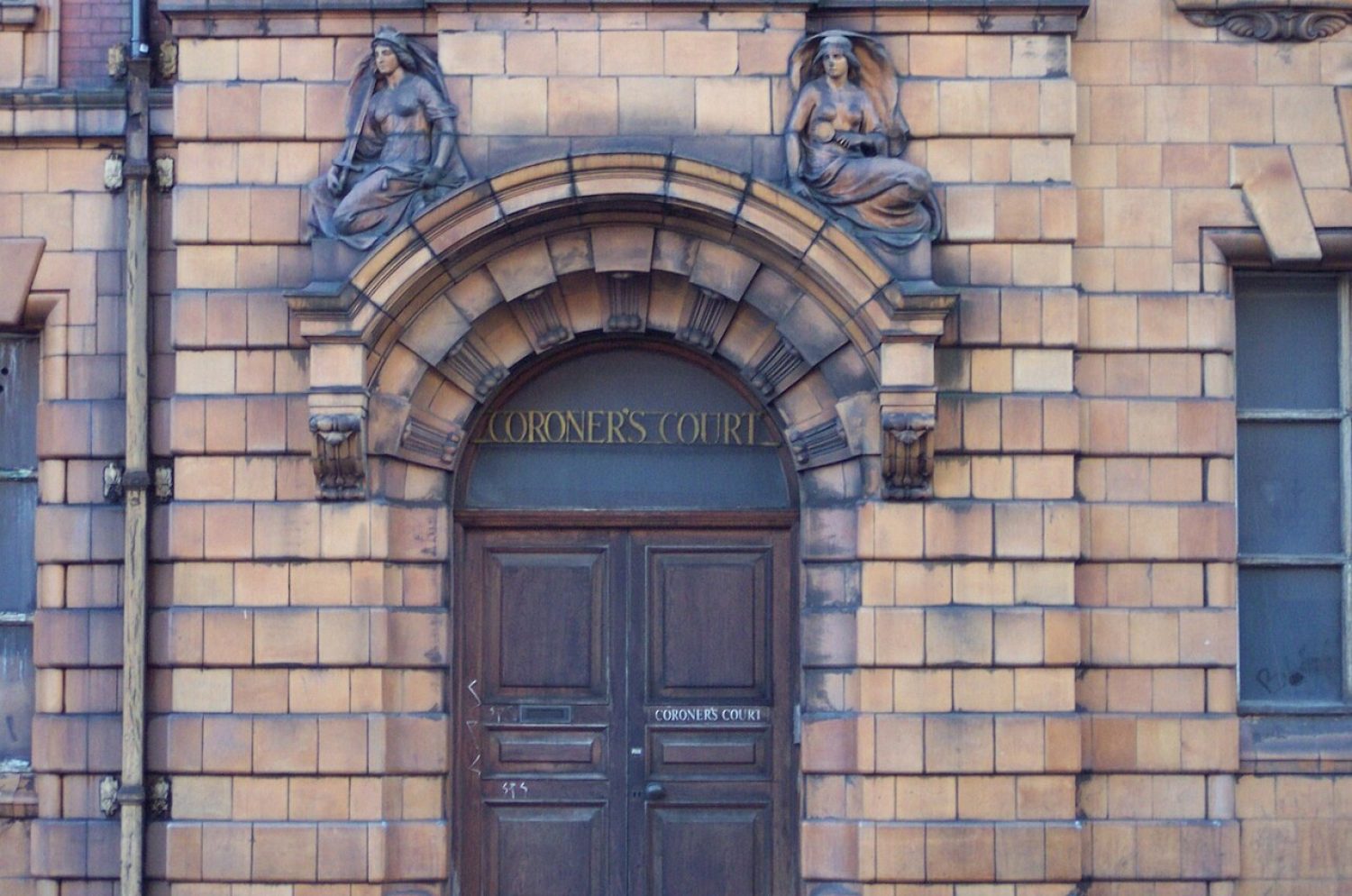
Maddison, please tell us about your work experience
I have worked most recently as a Coroner’s Officer for a couple of different Coroners within London.
I started working in the sector just after I finished university in 2014 and worked in death care for 12 years, firstly in a hospital mortuary training to do physical post-mortems.
I also worked in a funeral director’s mortuary, and then latterly as one of their area managers. Finally, I ended up in London working as a Coroner’s Officer.
What is the role of the Coroner’s Office?
The role of the Coroner’s Office is to establish someone's cause of death, or to investigate causes that appear unnatural. This means a death that hasn't resulted from a naturally occurring illness or disease.
That can include:
- people who may have died from the effects of drugs and alcohol
- people who have had an accident
- people who had a fall shortly before they died.
Coroners are independent judicial figures. The Coroner who makes the decision on the types of deaths that we're investigating is a judge. They often have both legal and medical training. They are not part of the NHS or the government.
Once the Coroner has been appointed and is investigating the cause of someone's death, then the Coroner has total and complete jurisdiction over that person's body.
What is the process when a Coroner is involved in a death?
- When someone dies, if the medical professional responsible cannot state why the person has died, they refer the case to the Coroner’s Office where it will be picked up by a Coroner’s Officer.
- The Coroner’s Officer will review the information, get in touch with the GP or the hospice or hospital treatment team that are looking after the patient, and establish the facts. This can take several days.
- Next, the Coroner will review the facts collated by the Coroner’s Officer, and if they can establish why the person died, they will say that they don’t need to investigate any further. The body can then be released to the family, once they have appointed a funeral director.
- If they cannot establish the cause of death, the Coroner will open a formal investigation. This may require them to instruct for a post-mortem examination to be carried out, but sometimes the Coroner will have sufficient paper evidence to continue investigating. In this case, they may release the person’s body so the funeral can take place, while the Coroner continues investigating in the background.
- When the Coroner has made a judgement - either after a post mortem examination has been completed with a cause of death found, or at the conclusion of an inquest - the person’s death can be registered. Their body will usually be released for funeral once the post mortem has taken place.
You can sometimes have a funeral without the death being registered, provided the Coroner’s specific interim paperwork has been completed.
Can you arrange a funeral for someone while their body is with the Coroner?
No, the death can't be registered during this time, and funeral arrangements can't be made or proceeded with.
As Coroner’s Officers, we know that by the time families/friends of the person who has died have come to us, they are often devastated and very distressed.
In cases of a family of faith, where usually a burial takes place 24 hours after the person’s death, or before the next sunset, this can be an existential concern for them. I would make time to explain the process to families so that they understood what was happening and why, in certain circumstances, funerals can sometimes take several weeks or even months.
It can be long process. Why is that?
While it’s sometimes obvious that a Coroner will need to be involved in someone’s death, it can also happen in cases where the cause of death seems quite clear.
Families can find that very upsetting.
For example, if someone dies in the Intensive Care Unit at a hospital following surgery, ICU staff may have told the people there that their person is deteriorating and will die.
But while doctors may have identified the fact this person is dying, they may not be sure if the ultimate cause was something that happened in the surgery, or if it's a natural fact of their original illness, or if it was caused by a complication post-surgery.
In cases like this, the doctor will refer the case to the medical examiner, who will speak with the consultant, the person’s doctors and review their surgery notes. If they cannot determine why this person died, they will refer the death to the Coroner. But this can be confusing for the family, because they knew their person was dying – as the ICU staff told them it was going to happen.
What should people know about the Coroner’s Office?
I’d like them to know that Coroner's Officers are absolutely on the side of the family of the person who has died, or whoever it is that is responsible for arranging the person’s funeral. And, though it’s a terrible process, once we understand the cause of someone's death, there's can be a strange comfort in it – for example, in instances where a young person has died suddenly and apparently for no reason, sometimes an otherwise unknown hereditary cause can be identified. While it doesn’t remove the heartbreak of the loss, if nothing else it gives an explanation, and sometimes a chance for family screening for other members of the family.
I also want people to know that we care about their person, and we care about them. I once supported a lady whose son had fallen from a block of flats. She said, ‘you just tell him that I love him, and tell him that I'm so sorry’. And I absolutely did.
Is there any advice you’d offer to people whose person’s death has been referred to the Coroner?
Appoint one person for the Coroner’s Office to speak to, just so everything's clear and straightforward. I used to suggest families ask me any questions by e-mail rather than on the phone.
Also, it’s good to know that you can speak to a funeral director and start making arrangements, just don’t book a date for the funeral until the Coroner’s Officer lets you know it’s ok to do so.
Does the Coroner’s Office deal with who is to blame for a person’s death?
No, the Coroner's court is not a court of blame, but of fact-finding. We're only interested in finding out what the cause of this person's death was.
Families can raise their concerns about how someone was treated by institutions in the time leading up to their death, but oftentimes, complaints have to be referred back to the team that was responsible for their person’s care and treatment, such as mental health services, a hospital or their GP. There are places to take complaints that are more appropriate. and these will be dealt with separately to the Coroner’s service.
The most the Coroner’s Office can do is to make a public ‘Record of Inquest’ that summarises the causes of death and the wider circumstances of the death. Then, if the Coroner feels that there are processes that could be improved to prevent a death like this happening again, they can then produce a ‘prevention of future deaths’ report or a ‘section 28 letter’.
A Section 28 Letter, is a letter the Coroner can write to an establishment to make them aware of what was found during the course of a Coronial investigation.
A prevention of Future Deaths Report is more formal and involves a high level of inquest and procedure. This may happen where there have been systematic problems or there's a chance that this death could be repeated again if things aren't changed.
What did you find most rewarding about working in a Coroner’s Office?
No one gets into any of this line of work who doesn't care.
We're all working together to get to a conclusion. I’ve found it immensely rewarding when families would say to me, ‘you've made this terrible time a little bit easier’.
Even if the cause of death remains unknown, we've given that person the dignity of investigation. They're a person who deserves to have everyone do their very best to try and find out why they died.
If you’re ready to start organising a funeral, we’re here to help.